Ottoman vs Divan Bed: Which Should You Buy?
Go for an ottoman if you want the most storage in the smallest footprint: the whole base lifts up to reveal one big space underneath. Choose a divan if you’d rather have drawers you can open without lifting anything, usually at a slightly lower price. Both are storage beds. The difference is how you get to your things, and how much room you get.
How each one works
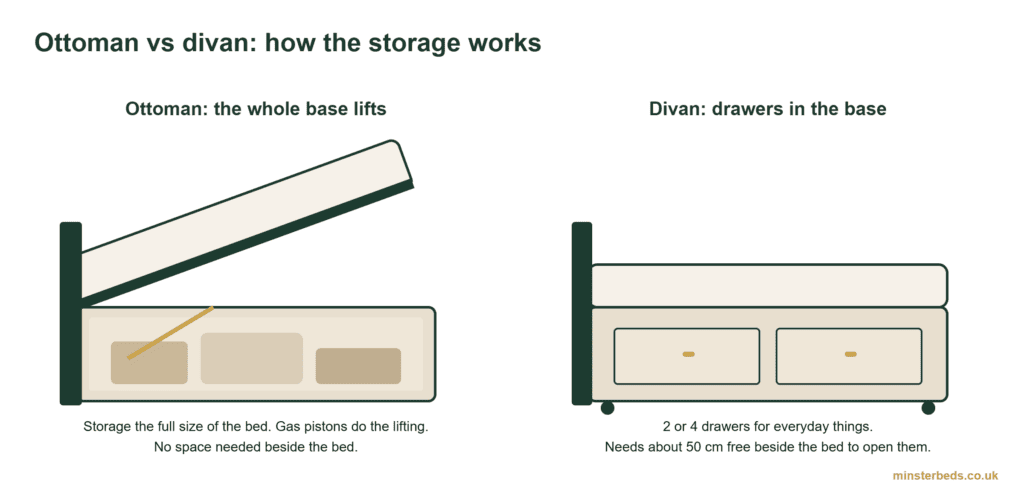
- Ottoman bed: a frame with a hinged base. Gas-lift pistons let you raise the mattress and base, usually from the foot end, opening onto one large storage well the full size of the bed.
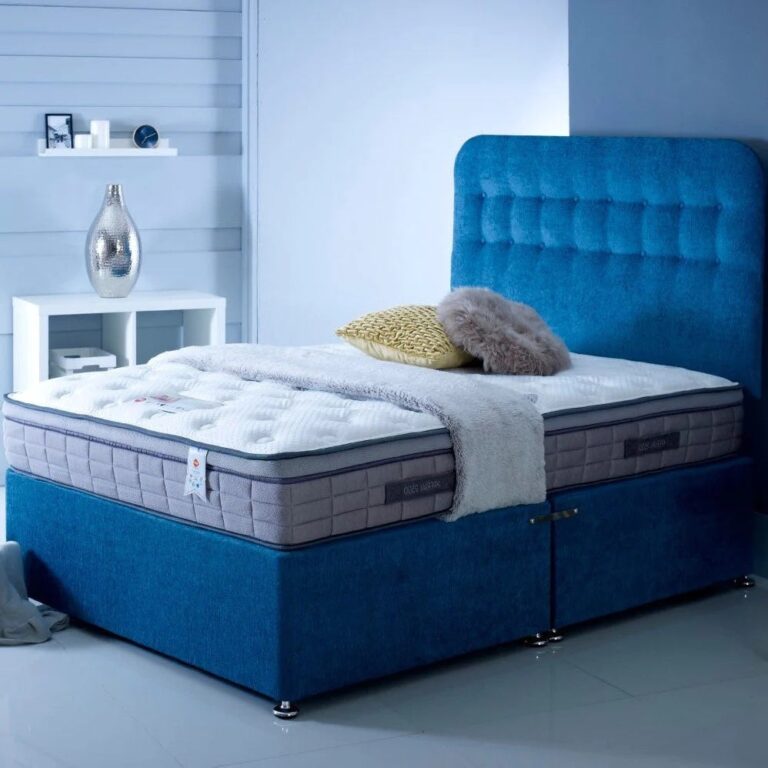
- Divan bed: a solid base, often with a sprung or padded top, sitting on castors or glides. Storage comes from drawers built into the sides (usually 2 or 4), and a separate headboard bolts on.
Side-by-side comparison
| Ottoman | Divan | |
|---|---|---|
| Storage space | The whole area under the bed: fits suitcases, duvets and bulky items | 2–4 drawers: better for clothes and bedding you use often |
| Getting to your things | Lift the base (the pistons do most of the work); the bed needs to be clear | Pull out a drawer: no lifting, even with someone in bed |
| Space needed | Nothing beside the bed, as it lifts upwards | About 50 cm free beside the bed to open drawers |
| Comfort | Slatted or solid platform under the mattress | Sprung or padded top can add a little extra give |
| Price | Usually more, because of the lift mechanism | Usually less for the same size |
| Looks | Upholstered frame, often with a built-in headboard | Plain base with a separate headboard |
| Moving it | Heavier and bulkier; arrives in several pieces | Usually two halves on castors |
Who should buy which
Pick an ottoman if:
- your room is small and there’s no space beside the bed for drawers (see our guide to beds for small rooms)
- you need to store big or seasonal things like suitcases, winter duvets or Christmas decorations
- you like the look of an upholstered bed frame and want storage built in
Pick a divan if:
- you get into your storage every day (clothes, towels, spare bedding)
- you can’t lift easily
- you want the lowest price for a storage bed
- the bed goes against a wall or into an alcove, where drawers on the open side still work
Things to check before you buy
- Opening direction: most ottomans lift from the foot end. Side-opening models are made for beds pushed against a wall.
- Gas-lift strength: pistons are rated for a certain mattress weight, so very heavy mattresses can need stronger ones. Check the product details.
- Drawer position: divans come with drawers on one side, both sides or the foot end. Choose the layout that suits the free space in your room.
- Mattress depth: keep to the depth the bed recommends so an ottoman lid closes properly. Our mattress depth guide can help.
Prefer a classic bed frame?
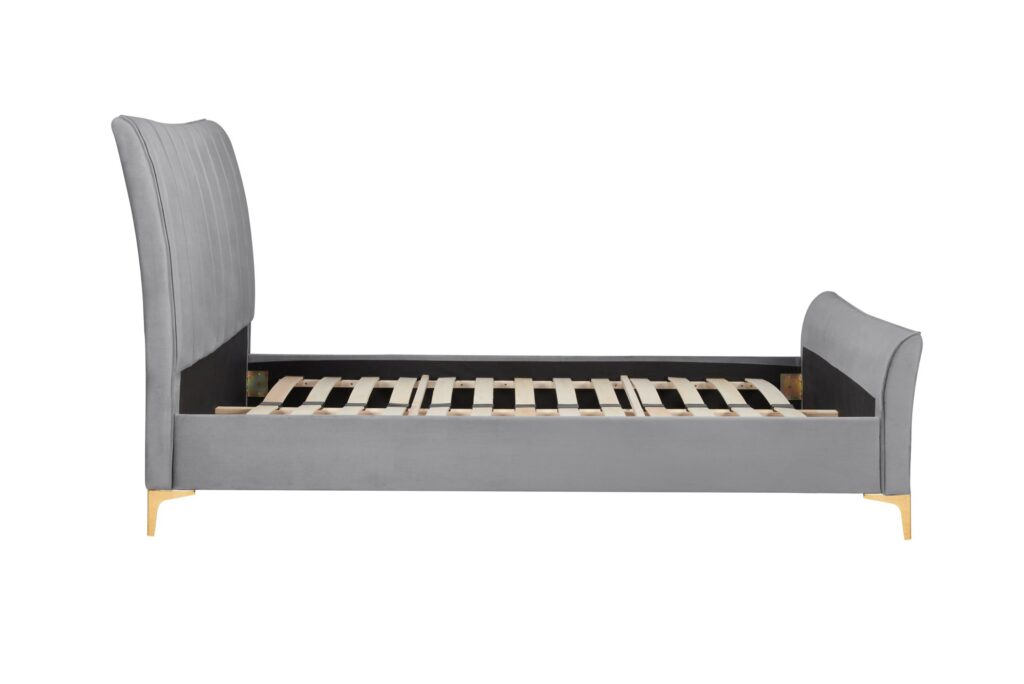
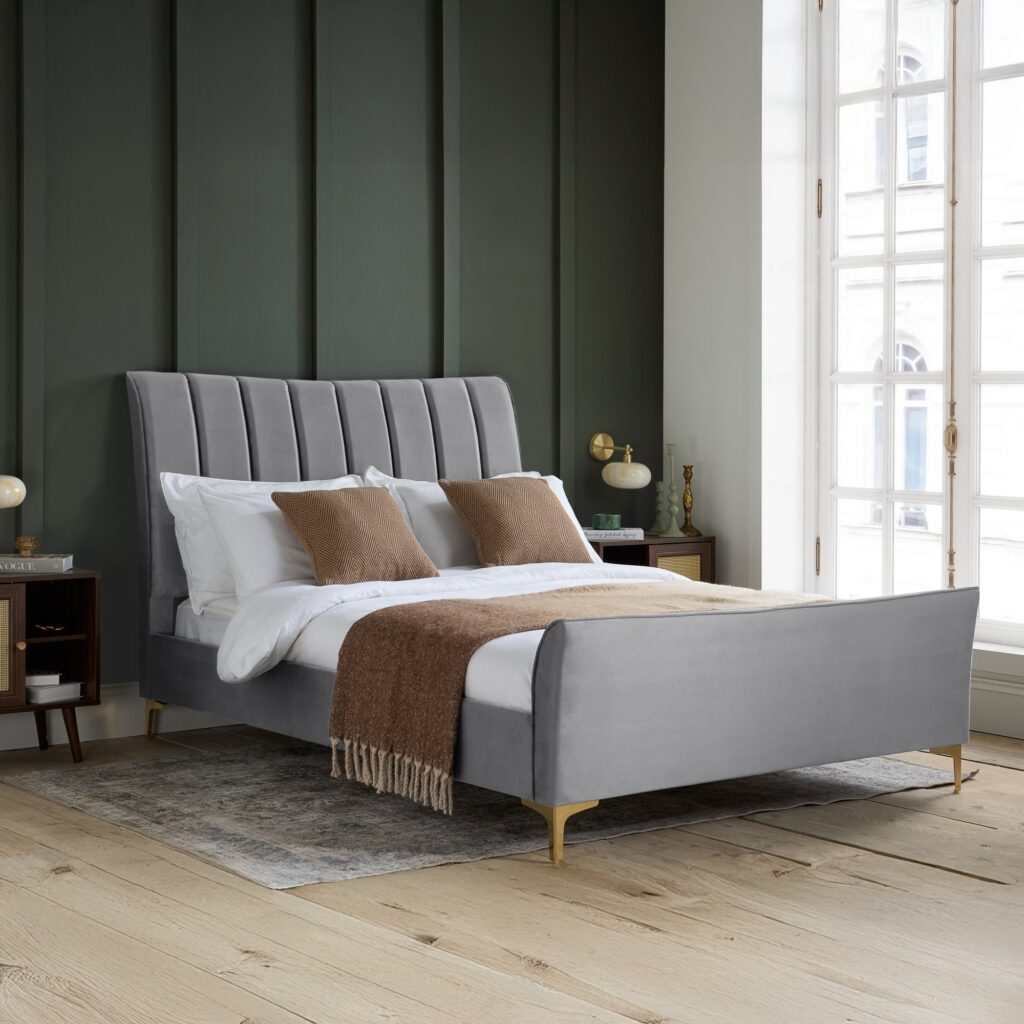
If storage isn’t your priority, a bed frame with a slatted base gives your mattress great support and lets air circulate underneath. The Clover Grey Velvet Bed Frame has a sprung slatted base and a tall pleated headboard, and the Tuscany Metal Bed Frame is a simple, easy-to-build option with a mesh base. Our guide to slatted, sprung slatted and mesh bases explains the difference.

FAQs
Is an ottoman bed worth it?
If you’re short of storage, absolutely. An ottoman often gives you more space than a small wardrobe, without taking up any extra floor.
Are ottoman beds hard to lift?
No. The gas pistons take most of the weight, so the base lifts easily once it’s set up for your mattress.
Can I use any mattress on an ottoman or divan?
Yes, as long as it’s the right size. Stick to a sensible depth (most are under 30 cm) so an ottoman’s lift isn’t overloaded.
Which lasts longer?
Both can last 10 years or more if they’re well made. On an ottoman, the gas pistons are the part most likely to need replacing, and they’re cheap and easy to swap.
Related guides: The best beds for small rooms · UK bed sizes explained · Slatted vs sprung slatted vs mesh bases