The Best Beds for Small Rooms: A Practical Guide
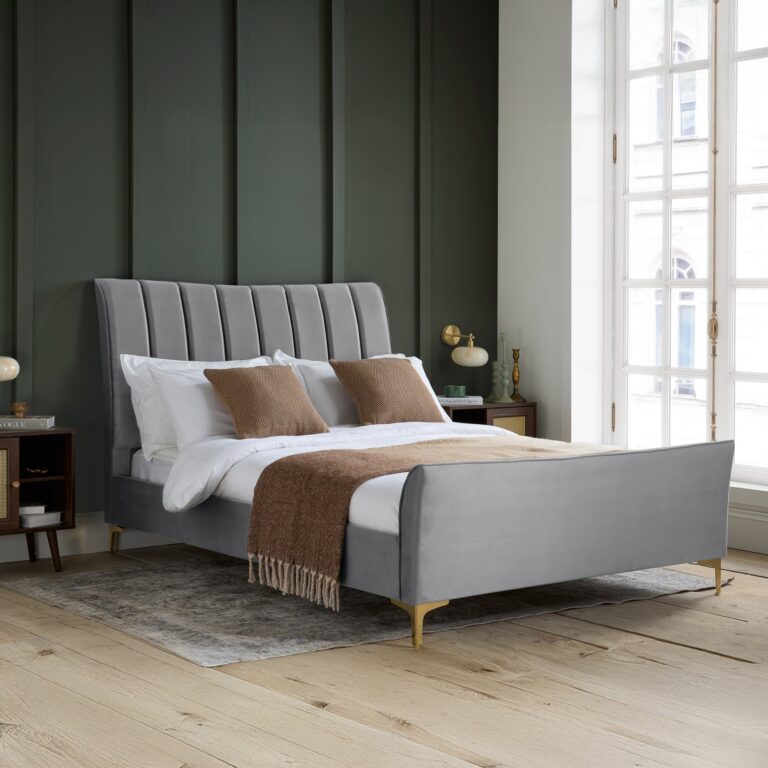
In a small bedroom, the right bed is the biggest one that still leaves about 60 cm to walk round it, ideally with storage built in so you can lose a chest of drawers. For most UK box rooms that means a small single or single. In a small double room, a small double (4 ft) often fits far better than a full double.
Step 1: measure properly
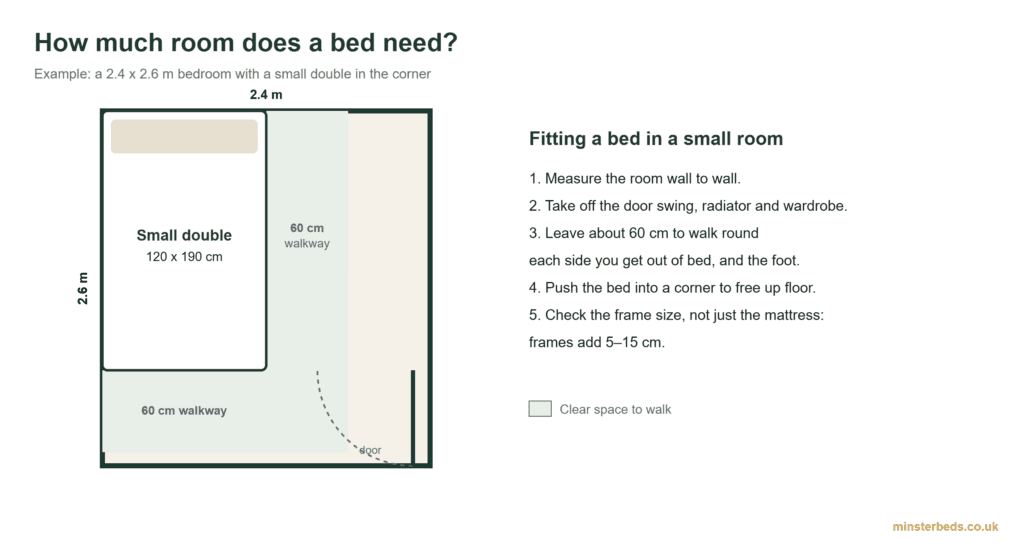
- Measure the floor wall to wall, and note the radiator, window, door swing and any alcoves.
- Take off about 60 cm for a walkway on each side you’ll get out of bed, and at the foot.
- What’s left is the biggest bed footprint that fits. Compare it with the frame’s outer size, not the mattress size, as frames add 5–15 cm.
- If you’re looking at a bunk or raised bed, check the headroom too, especially under sloping ceilings.
Step 2: pick the size
| Room type | Typical size | Bed that usually fits |
|---|---|---|
| Box room | About 2.0–2.4 m x 2.3 m | Small single (2’6″) or single (3′) |
| Small single room | About 2.4 m x 2.6 m | Single, or small double against a wall |
| Small double room | About 2.7 m x 2.7 m | Small double (4′) or double (4’6″) |
| Average double room | 3.0 m x 3.0 m and up | King (5′) |
A small double is only 15 cm narrower than a double, but it’s often the difference between squeezing past the bed and walking round it, and it still sleeps one adult very comfortably. See our UK bed sizes guide for exact dimensions.
Step 3: choose a space-saving style
- Ottoman bed: the base lifts to reveal storage the full size of the bed, and needs no space beside it. Compare the options in our ottoman vs divan guide.
- Divan with drawers: works well if you have about 50 cm free on one side.
- Simple metal frame: a slim frame like the Tuscany Metal Bed Frame has a light, open look that keeps a small room feeling airy. It comes in single, small double and double.
- Bunk beds: two beds in the footprint of one, perfect for shared children’s rooms. Our Metal No Bolt Bunk Bed goes together in around 15 minutes with no tools. Read our bunk bed safety guide first.
- Low frame with no footboard: less visual bulk, so the room looks bigger, and no stubbed toes.

Small-room tips
- Push the bed into a corner to free up a whole side of the floor.
- Choose a slim headboard, or one you can lean a book on, instead of bulky bedside tables.
- Light colours and frames on legs, where you can see the floor underneath, make a bed feel smaller.
- Check the delivery route: measure the stairs, landing and door before you order.
The right mattress for a small bed
For a small single or single, a slim foam mattress like the Postureflex Flex 150 is light and easy to move and works brilliantly on bunk beds. For a small double, the SleepSoul Balance 800 gives pocket-sprung comfort at a friendly price.


FAQs
Can a double bed fit in a box room?
Rarely. Most UK box rooms are under 2.4 m wide, which leaves no walkway beside a 135 cm double. A small double pushed against a wall can work in a slightly bigger room.
What is the smallest double bed?
The small double, at 120 x 190 cm (4 ft x 6’3″).
What’s the best bed for a room with a sloping ceiling?
A low frame placed so you sit up under the highest part of the ceiling. Avoid tall bunk beds there.
Related guides: UK bed sizes explained · Ottoman vs divan · The best mattress for a guest room