How Long Does a Mattress Last? When to Replace It
Most mattresses last around 7 to 10 years. How long yours lasts depends on how it’s made, how well it’s looked after, and how much use it gets. But the calendar is only half the story: if you’re waking up stiff, sleeping better anywhere but your own bed, or can feel a dip where you lie, it’s probably time for a new one, whatever its age.
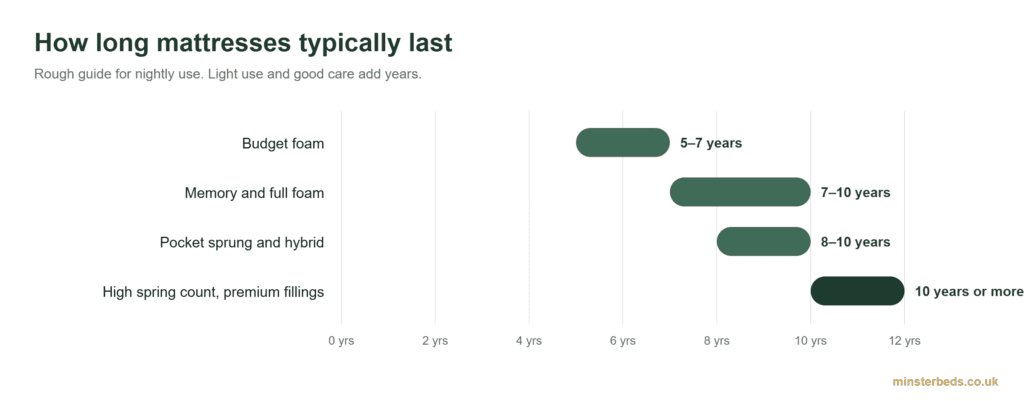
How long different mattresses last
| Mattress type | Typical lifespan | Examples in our range |
|---|---|---|
| Budget foam | 5–7 years | Postureflex Flex 150 |
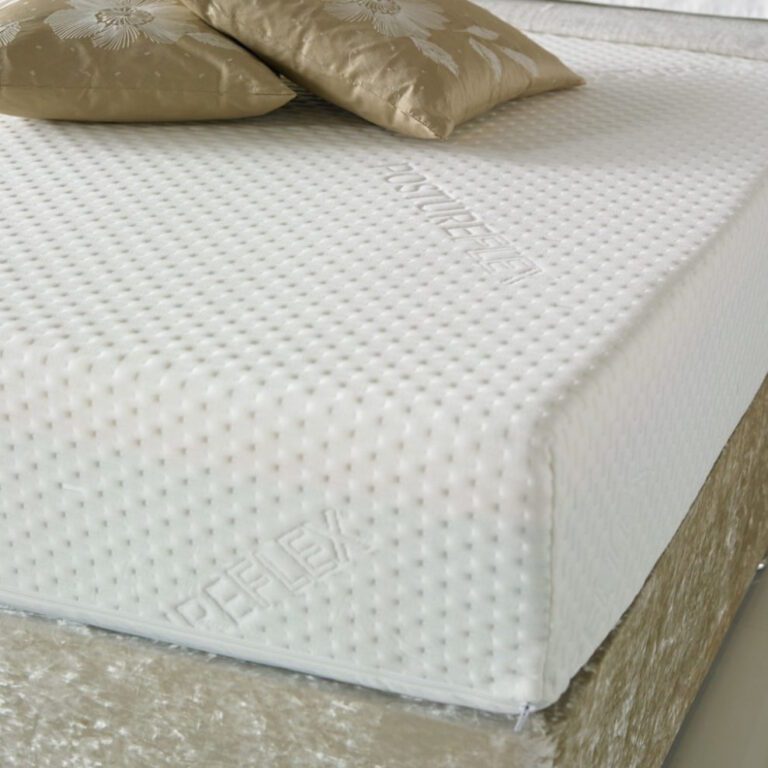
| Memory foam and full foam | 7–10 years | Postureflex Crystal Memory, Eco Premium, Flex 250 |
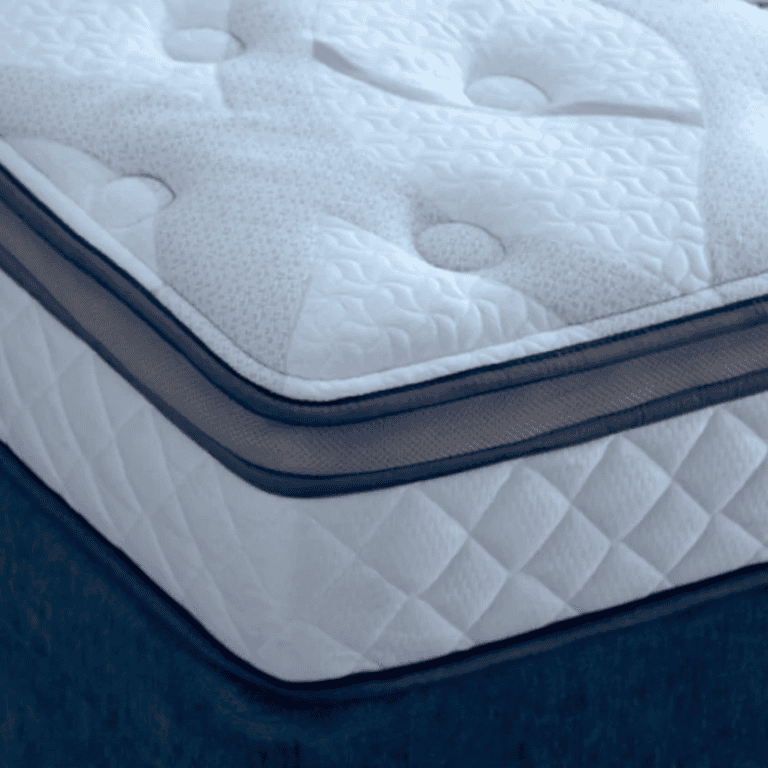
| Pocket sprung and hybrid | 8–10 years | SleepSoul Balance 800, Baker & Wells Excellence 1000, Majestic 1000 |
| High spring count, premium fillings | 10 years or more | Baker & Wells Imperial 2500 |
These are rough guides, not guarantees. A guest-room mattress that’s slept on a few times a year will last far longer than one used every night by two adults.
Seven signs it’s time for a new mattress
- You wake up achy or stiff, and it eases once you’re up and about.
- There’s a visible dip or sag where you sleep, deeper than about 2–3 cm.
- You can feel springs or lumps through the top.
- You sleep better somewhere else: a hotel, a friend’s spare room, even the sofa.
- You feel every move your partner makes, when you didn’t used to.
- Allergies or a stuffy nose are worse in bed. Older mattresses build up dust mites and allergens over the years.
- It’s noisy. Creaks and pings usually mean the springs are wearing out.
If two or three of these sound familiar, your mattress is probably past its best, even if it’s only six or seven years old.
What makes a mattress wear out faster
- Never rotating it, so the same spots take all the weight
- A worn or uneven base: broken slats or a sagging divan wear out the mattress on top
- Children jumping on it (we’ve all been there)
- No protector: sweat and spills break down the fillings over time
- Sitting on the same edge every day to get dressed
Our guide to looking after your mattress covers how to avoid all of these.
Should you replace the base too?
If your base is the same age as your mattress, it’s worth a look. Check for cracked or missing slats, slats more than about 7 cm apart, or a divan that dips in the middle. A new mattress on a tired base won’t feel or last as it should. The Clover Grey Velvet Bed Frame comes with a sprung slatted base, and the Tuscany Metal Bed Frame has a supportive mesh base.
Don’t forget your pillows
Pillows wear out much faster than mattresses, usually every one to two years. Our guide to replacing pillows explains how to tell, and the MLILY Premier Deluxe and Bellissimo Cashmere Wool Pillow are good places to start.


FAQs
How often should you replace a mattress?
Every 7 to 10 years for most mattresses, or sooner if it’s sagging or you’re sleeping badly.
Can a mattress last 15 years?
Some premium mattresses can, especially with light use. But even if it looks fine, the support usually isn’t what it was after 10 years.
Does a more expensive mattress last longer?
Generally, yes. Higher spring counts, denser foams and better fillings hold their shape for longer, and good care makes a big difference too.
What do I do with my old mattress?
Most councils offer a bulky waste collection for a small fee, and many household recycling centres accept mattresses. Check your local council’s website.
Related guides: What to expect from a new mattress · How to look after your mattress · The best budget mattresses